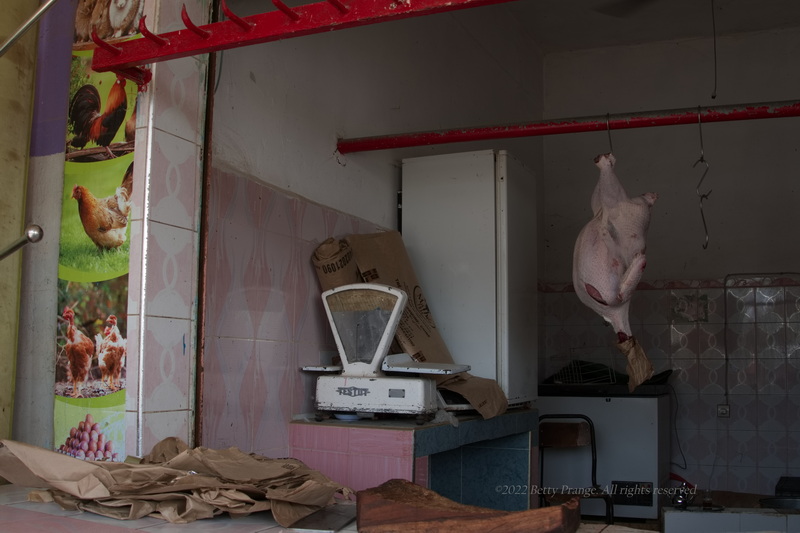
One of the joys of visiting Morocco is the food. With abundant fresh fruits and vegetables, savory combinations of meat and fruit, and a myriad of aromatic seasonings, Morocco is a memorable epicurean experience. Saffron, that most expensive, by weight, of all spices, is grown here. Foods are flavored with unique blends of spices; savory, fragrant and generally not hot. Olives, figs, apricots, citrus, apples, prunes, the best melons I have ever tasted, grains including couscous, nuts, tomatoes, eggplants, squash, onions, garlic, dates and mint are all grown here, and Morocco exports food to Europe. With Atlantic and Mediterranean coasts, fishing is a major industry and cattle, chickens, lamb, goats, and camels add to the mix. Although there are a growing number of mechanized farms, small, family farms are still the norm and donkeys, mules and horses are common.
A sign of hospitality is mint tea, sometimes known as "Berber Whiskey." Visitors are welcomed into riads and dars (lodgings) Berber tents and caves, shops, and homes with tea and the ceremony that accompanies it. Fresh mint leaves are stuffed into a tea pot, or glasses, and hot tea is poured over them. Once steeped, the tea is poured, from high above, into the small tea glasses to aerate and froth the tea. Usually it is then poured back into the pot and the process is repeated a time or two. By the time the tea glass is handed to you, the tea has cooled to a drinkable stage, the glasses can be handled without burns, and a cap of froth tops the glass. Sugar is generally added, and Moroccans consume a lot of sugar .In the hot summers, the hot
mint tea and sugar refresh and invigorate.
 |
| Here Hamid pours tea for us in a Berber tent. |
.
 |
| Our hostess brought the tea from her adobe house but made sure everything was okay and our guide Hamid was doing the tea justice. He poured some into a glass, then back into the tea pot, back into the glass, and the routine again. It was only after all that he poured, from above his head and passed the glasses to all of us. |
 |
| We visited a multi-generational family who wove rugs (sheep, goat, camel, and the fine silk of the agave) Tea was of course provided. We sat on the floor, enjoyed the tea and the rugs. And yes, several of us bought a rug or two. Mine is quite small, but I would not leave without one. I will put it in my new trailer when it arrives. |
 |
| Lunch in another home. Our host is pouring the tea back in the pot to blend it all well. |
 |
| Mouhammad uses his turban as a hot pad. Turbans have many uses. It protects the head and neck from hot sun, the long tail can quickly be drawn across the face in a windstorm. |
 |
| Mouhammad again. |
We had fresh squeezed orange juice every morning and sometimes as a treat during the day:
 |
| Kids. Goats do well in the arid desert areas. |
 |
| Sacks of various kinds of flour, delivered early in the morning to the bakery described below. |
 |
These round loaves of bread are called "khobz". This is what you see the baker handing out to a waiting customer. Often the bread dough is done at home, shaped, and then taken to the village baker. In the heat of summer this is especially practical. The baker uses a long flat tong on a stick like the one you see to the right of the baker, much like you would use in a pizza oven.
|
Tagines are a type of stew, named after the conical clay pots in which they are cooked. This one was still bubbling when brought to the table and the aroma when the lid was lifted off was phenomenal. Tagines are frequently a combination of sweet and savory, with a blend of spices; beef with prunes, lamb with apricots. This is chicken with green olives and preserved lemons. If you enlarge the photo you can see it is still bubbling.
and here are some tagine pots. These are plain, everyday ones. Often they are painted and glazed with geometric designs.
 |
| With the Atlantic on one side and the straits of Gibraltar and entrance to the Mediterranean, fish is a stable. Here he holds octopi. I have an identical rain jacket, although his looks cleaner and newer than mine. I am sure if I had been wearing mine, it would have been a great point of discussion...mostly pantomime. |
 |
note all the olives. Also pickled vegetables
|
 |
| Even in the desert, a water source makes for lush date palms. |

 |
| variety of cookies for desert. Fruit is also a common desert. Fresh sliced oranges sprinkled with cinnamon is delicious |
 |
| Spices in the souk |
 |
| It is everywhere. I've never been to a country where I didn't see it. |
 |
| Argon oil comes from argon, much as olive oil comes from olives which are crushed to extract the oil. But olives, once they have been brined and cured, are great treats for humans. And in Morocco, I don't think I ever saw a table where there weren't some olives available. Often multiple kinds from pale, pale yellow-green to deep purple and black. Argon, on the other hand, is consumed by goats. They eat the fruit, spit out the pit. The pit is then crushed for the oil. Goats provide wool, milk, meat, and prepare the argon oil. Oil is used in food preparation but its big market is shampoo and cosmetics. And YES, the goats do climb the trees to eat the fruit. These particular goats were by the road, obviously serving as a tourist attraction. But how can you pass on the cute boy and the young goat. |
 |
| We had a picnic in an olive orchard. |
 |
| Outside patio dining at one of our dar |
">
 |
| orange juice on the road. |