Tuesday, March 8, 2011

Doorways in Ecuador


Doorways, doors, windows, and gates always intrigue me. I first fell in love with photographing doorways in Mexico. Then, as I traveled in the southwest US, in Spain, and in Morocco I began seeing the Moorish influence as it moved to Spain and Spain's former colonies.
I think the most interesting door is the one with the hand of Fatima door knocker. This is seen on almost every door in Morocco, a symbol of Fatima, wife of Mohammad. It is interesting to see it has survived the Inquisition and I found one in Ecuador.
I have hundreds more doorway photos. I will share only these in the blog.


Ted and AnaMaria ordering lunch in Quito
Yellowstone staff will be amazed at the two photos below. Ted is actually opening and closing a gate. We were visiting AnaMaria's cousin in the country. This gate led into the courtyard of the farm. For non-Yellowstone staff, the joke is that Ted is the "Doorman" at the Lake Hotel. But he is so busy"showing people the photo of himself as a "jammer" back in 1965 or chatting with folks, that most people have to open the door for themselves! Certainly staff have to open it to get in.


This is the hand of Fatima door knocker.


Ingapirca's ancient ruins

Five hundred years ago the Inca civilization extended from what is now Argentina to Bolivia, from the jungles of the Amazon to the highlands of the Andes. Machu Picchu, the center of that civilization, is the best known remains and is enormous. In Ecuador, the largest ruin is small by comparison, but it has a quiet sense which I find more appealing. And, the site, Ingapirca, contains not only Inca but an earlier Canari temple and civilization.


During the Spanish era, much of the area was desecrated, the beautifully chiseled stones carted off for churches and homes. But some remained. Some stones have been returned to the site. And today, the Canari people still use the site for religious ceremonies. The Inca's chiseled and fitted the stones so carefully that they did not require mortar. And the earlier Canari people had learned to make doorways and windows with an arch to make them earthquake resistant.


The Inca Temple was to the sun. It was situated so that on the solstices, the sun would light up an area, through the doorways. The Canari worshipped the moon. One of the remainders of that worship is a rock with water holding indentations. Each night the moon would center in a different hole, making this an early calendar.


scenery on the rough road to Ingapirca. Heavy rains left rock slides and good sized chuckholes

Thursday, February 24, 2011

Galapagos Reptiles and Crustaceans


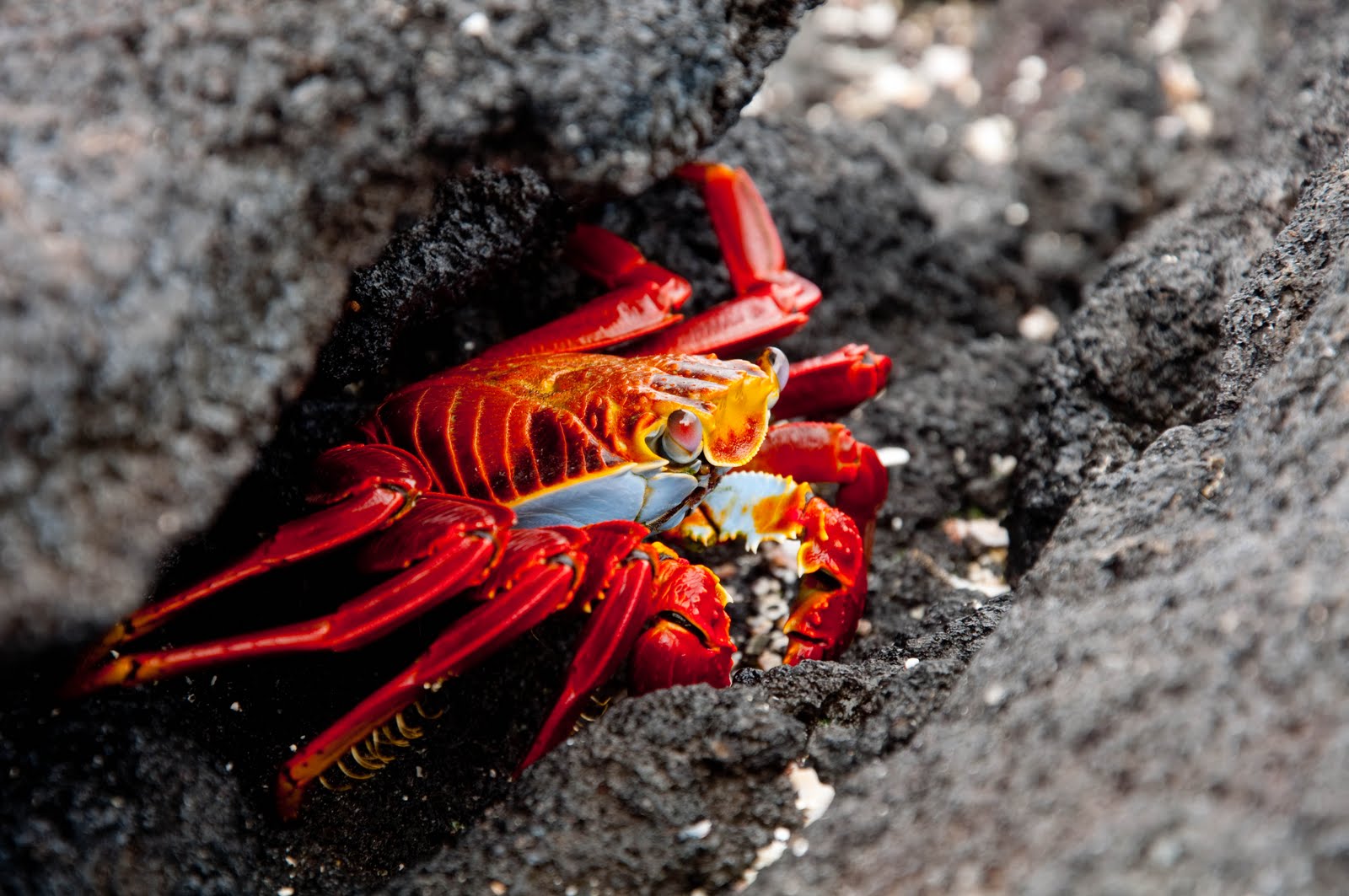
During the visit I saw land and marine iguanas, sea turtles and land tortoises, and wonderfully colored Sally Lightfoot Crabs. Here are some samples of the special creatures of the Galapagos.


The final photo is of Lonesome George who now resides at the Charles Darwin Center. George is the last of his species. The tortoises of the Galapagos evolved over time until theywere quite distinct from island to island. During the couple hundred years humans have visited and inhabited the islands the tortoise population dropped dramatically. Animals were introduced that competed for food and ate eggs, and sailors caught the giant land tortoises and put them on their backs in the holds of the ships for future meat. A tortoise can last for months without food or water, and placed on their backs they could not escape. It meant fresh meat after months at sea.
On some islands the tortoises have short necks, on others their necks can stretch well above them to brouse on leaves of shrubs and trees. The shells, likewise, are adapted to the terrain, the need to stretch necks etc. In the case of George, he was the very last tortoise on his island when they decided to move him. Using DNA testing a couple of females from another island but with close DNA were placed in his pen. However, non of the eggs laid were fertile. Attempts continue but he isn't showing much interest.


marine iguanas above and Sally Lightfoot crabs moving across the rocks.


land iguana


marine iguana


The Galapagos Islands are part of a volcanic chain. Here is an example of rope lava which has split.


Lonesome George